


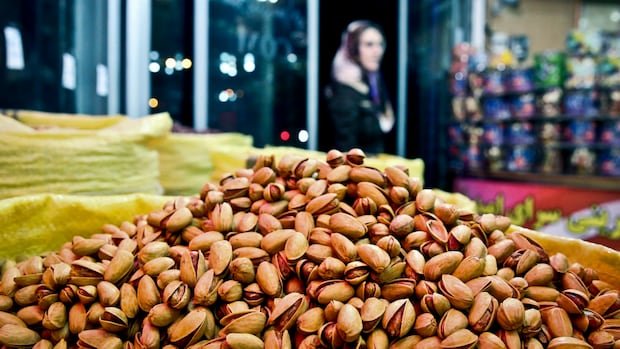
Iranian pistachios previously imported into Canada must be preserved and tested for salmonella before being sold, federal officials say.
The move comes as federal health officials conduct an ongoing outbreak investigation that includes 155 lab-confirmed salmonella infections that have been identified nationwide, and the true number is likely higher, given that not all sick people seek medical care for testing.
Of the cases, 24 people were hospitalized and there were no deaths. People became ill between early March and mid-November.
Federal authorities on Tuesday advised consumers “to consider alternatives to Iranian pistachios and products made with Iranian pistachios,” due to possible contamination with several types of salmonella.
“Many people who became ill reported eating pistachios and products containing pistachios, such as Dubai style chocolate and pastry products“, according to a notice from the Public Health Agency of Canada (PHAC).
The Canadian Food Inspection Agency (CFIA) noted that several brands of pistachios and pistachio-containing products, including Dubai pistachio and knafeh milk chocolate, as well as the nuts themselves, are under recall.
Research continues and more foods may be identified.
Why does salmonella persist in nuts?
Salmonella infection is a foodborne bacterial illness that can cause fever, headache, vomiting, nausea, cramps, and diarrhea. It occurs when fecal material from infected humans or animals enters our mouth, for example, by consuming contaminated food or drinks.
Salmonella may be common in farming areas due to manure runoff from animal production and sewage spills, microbiologists say.
“There are certain salmonellae, such as the Havana serotype, that can persist in the soil,” he says.helps Keith Warriner, a professor specializing in food safety at the University of Guelph.

Pistachios grow on trees and can be contaminated by birds, insects or fungus during growth, during harvesting or processing.
Pistachios also have a long shelf life, so products purchased months ago may still be in your home or business, health officials warned individuals, as well as retailers, distributors and food service establishments such as grocery stores, pharmacies, bakeries and cafes across Canada.
Consumers should check CFIA Recall Listings to see if your product is affected and compare product details (brand, product name and size, UPC and codes) with recall notices, the food agency said.
“Do not consume, serve, use, sell or distribute recalled products or use them in cooking or baking; heat may not kill salmonella in pistachios,” PHAC recommended. Instead, throw away or return recalled products to the place of purchase.
Salmonella survives very well in dry foods, food microbiologists say. Previous outbreaks have been attributed to other nuts such as almonds, as well as chocolate and flour.
Delays in drying were associated with increased pathogen growth in a US study of pistachios.
What about chocolate?
Processing may not kill salmonella bacteria, food scientists say.
When contaminated nuts are incorporated into chocolate, salmonella can survive the stomach acid and relatively low doses can cause illness, Warriner said.
What is Iran’s role in this outbreak?
The pistachios affected in this outbreak were imported from Iran and pistachios from countries other than Iran are not affected, according to the Government of Canada site.
Authorities advise that it is safer to avoid the product if the country of origin cannot be confirmed, adding that not all products containing pistachio have labels indicating where each ingredient comes from.

Recent pistachio recalls are impacting Ottawa businesses. The owner and chocolatier of Pistachio Choco says he constantly deals with concerned customers.
Since September 27, Canada has temporarily banned the import of pistachios and pistachio-containing products from Iran as a precautionary measure to prevent the possibility of new contaminated products entering the market, in addition to testing, inspections, recall notices and verification by the CFIA.
“In addition to these actions, the CFIA has now made it mandatory for all federally licensed importers and manufacturers who have Iranian pistachios imported before September 27 to hold them and test them for Salmonella before they can be sold in Canada.”
The goal is to protect Canadians from diseases and give consumers greater assurance that what they buy is safe, the CFIA said.
Warriner said there was a similar response to romaine lettuce which was exported from the Salinas Valley of California in response to an outbreak of E. coli O157:H7.
“It is not an unexpected reaction from the CFIA to request evidence,” Warriner said in an email. “However, requiring testing can be seen as a trade barrier. In the case of romaine lettuce, the testing requirement was said to put US growers at a disadvantage, so a compromise was reached.”
Warriner noted that with pistachios, another risk is that the nuts could be distributed to other countries such as Türkiye. Since the United States and Iran are the two main producers of pistachios, determining the origin “would be relatively easy.”
In his opinion, the evidence it’s more like They are looking for needles in haystacks and what is needed are decontamination methods.