




The first half of this year was the costliest on record in terms of weather and climate disasters in the United States, according to an analysis released Wednesday by the nonprofit Climate Central.
It’s information the public may never have known: This spring, the Trump administration cut the National Oceanic and Atmospheric Administration program that had tracked weather events that caused at least $1 billion in damage. The researcher who led that work, Adam Smith, left NOAA because of that decision.
Climate Central, a research group focused on the effects of climate change, hired Smith to reconstruct the database, which includes records dating back to 1980.
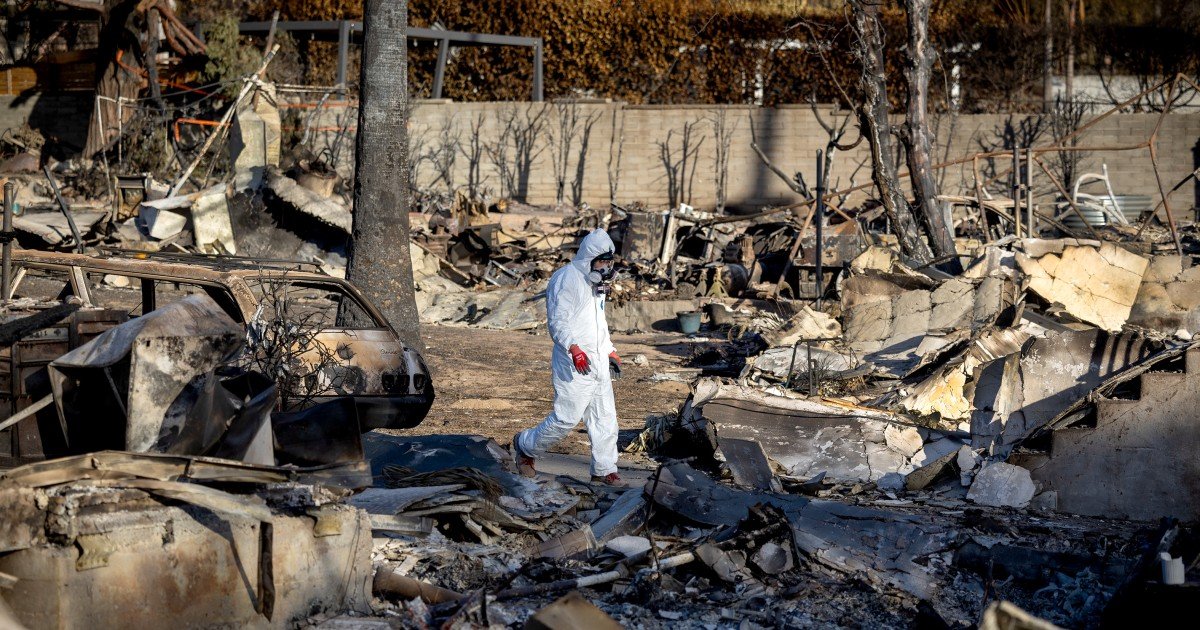
According to the organization’s new analysis, 14 weather events exceeded $1 billion in damage in the first six months of 2025. The January wildfires in Los Angeles were by far the costliest natural disaster so far this year, causing more than $61 billion in damage. That also makes them the most expensive wildfire ever recorded.
The findings show how the costs of weather and climate disasters continue to rise as extreme weather conditions become more frequent and intense, and as populations spread into areas prone to costly destruction from wildfires and floods.
The report itself is also an example of the way nonprofit groups are increasingly taking on federal projects that once tracked and quantified the effects of climate change as the Trump administration makes cuts to climate science. President Donald Trump has called climate change a “scam.” His administration has cut funding for clean energy projects and is trying to eliminate the Environmental Protection Agency’s ability to regulate greenhouse gas pollution that is causing global warming.
Jennifer Brady, a senior data analyst and research manager at Climate Central who worked on the project, said the closure of NOAA’s multibillion-dollar disaster database upset the nonprofit’s staff, who decided to take matters into their own hands.
“This has always been one of our favorite data sets. It tells a lot of different stories. It tells the story of climate change. It tells the story of where people live, how they live at risk,” Brady said. “We’re happy to bring him back.”
NOAA spokeswoman Kim Doster said the agency “appreciates that the Billion Dollar Disaster Product has found a funding mechanism other than the taxpayer dime.”
“NOAA will continue to refocus its resources on products that adhere to the President’s Executive Order restoring gold standard science, prioritizing robust and unbiased research,” Doster said in an email.
The database was a politically polarizing project. House Republicans complained to the NOAA administrator in 2024 about the program, expressing concerns about what they described as “misleading data.” Last month, Senate Democrats introduced legislation that would require NOAA to publish the data set and update it twice a year, saying lawmakers used the reports to inform disaster funding decisions. But the bill remains in committee and has little chance of passing the Republican-controlled Senate.
Last month, a Trump administration official told NBC News that NOAA had ended the database project due to uncertainties about how it estimated the costs of disasters. The official said the project cost about $300,000 a year, required significant staff hours, and that the data “is useless for decision-making and remains purely informational at best.”
“This data is often used to promote the narrative that climate change is making disasters more frequent, more extreme and more costly, without taking into account other factors such as increased development in floodplains or other climate-affected locations or the cyclical nature of climate in various regions,” the official said at the time.
Brady, however, said the database has always recognized that changes in population and climate variability are important factors in the cost of disasters.
Climate Central’s work uses the same methodology and data sources as the NOAA database, he said. Those sources include National Flood Insurance Program claims, NOAA storm data, and private property insurance data, among others.
The analysis captures the “direct costs” of disasters, such as damage to buildings, infrastructure and crops. It does not take into account other considerations, including loss of life, health-related costs of disasters, or economic losses to “natural capital” such as forests or wetlands. The data is adjusted to take into account inflation.
New analysis of the first half of 2025 indicates that this year is on track to be one of the costliest on record, even though no hurricanes have made landfall in the continental US.
Last year, NOAA accounted for $27 billion in disasters, with costs totaling about $182.7 billion. This is the second-highest number of billion-dollar disasters in the history of the report, after 2023.
Climate Central isn’t the only group stepping in to recreate the work the federal government used to do while the Trump administration made cuts to climate science.
A group of laid-off NOAA employees launched Climate.us, a nonprofit successor to Climate.gov, a federal website that once provided data and analysis to explain climate issues to the general public. The site went dark this summer.
Rebecca Lindsey, who edited Climate.gov before being laid off in February, said she and the other NOAA employees who co-founded the nonprofit have raised about $160,000. They plan to host Climate.gov archives on the new site and begin publishing new articles about climate change in the coming weeks.
“We’re salvaging this information and making sure that when people need answers about what’s happening with the climate, they can find them,” Lindsey said.
The American Geophysical Union and the American Meteorological Society also announced that they plan to publish a special collection of research focused on climate change, after the Trump administration told scientists who volunteered to work on the National Climate Assessment (a comprehensive synthesis of research on climate change and its effects in the US) that they were no longer needed.
The administration laid off staff from the U.S. Global Change Research Program, which organized the National Climate Assessment and coordinated climate research programs across different federal agencies.
Walter Robinson, publications commissioner of the American Meteorological Society, said the National Climate Assessment had been “effectively canceled” by the administration’s decisions, which he considered an “abrogation” of the federal government’s responsibility.
The new collection can’t replace the assessment, he added, but its goal is to organize the latest science on the effects of climate change in the U.S. in one place. The research will be published in several scientific journals on an ongoing basis.
“People are stepping in,” Robinson said of his group’s efforts. “As scientists, we do what we can.”