



CBC Virtual Road Trip Series Land of living stories Explore the hidden gems in Saskatchewan. Reporter Janani Whitfield traveled to Gravelbourg in search of inspiring stories about community spirit. This is the second of a four-part series from that community.
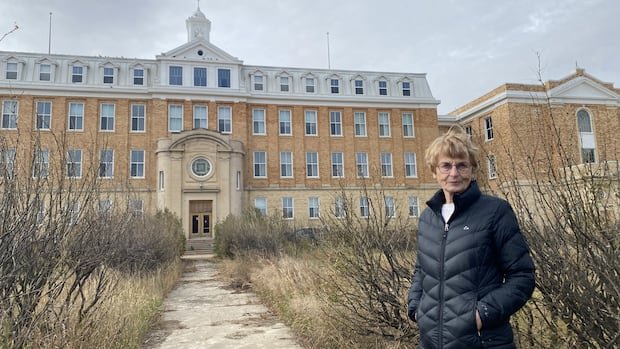
From the window of the historic house she runs as a B&B, Maria Lepage can see the school and convent she attended growing up, once full of life and laughter, but now empty, as they have been for almost a decade.
It’s hard to miss the giant building at the entrance to the town of Gravelbourg, a community of less than 1,000 people located about 150 kilometers southwest of Regina. The landscape dominates, as does the question of the future of this small but picturesque town whose motto is “A touch of Europe on the prairies.”
Right now, this 90,000 square foot building is available to anyone who has a viable idea to fix it up and turn it into a sustainable development.
“[It] It means a lot to me,” Lepage said. “I think we have a diamond in our community and this is one of them… I think people don’t realize the value of what we have here in Gravelbourg.”
When you hear people talk about tearing down this historic monument, the thought hurts your heart.
A French capital in the West
When French settlers began arriving in the area around what is now Gravelbourg, they quickly began constructing the sturdy brick buildings that remain to this day, giving the town its picturesque heritage feel.
The convent was built in 1917. The city’s famous cathedral and the episcopal palace (now the Lepage B&B) were also built in the same area and period.
Those three buildings, now a National Historic Site of Canada, were built with the ambition of distinguishing Gravelbourg as an important French center in the West. And for a time, that ambition seemed to come true: up to 600 students attended the school.
LISTEN| Could a centenary convent solve the real estate crisis?:
After the convent closed and students moved into a new school building, the city took over basic maintenance of the former convent in 2016. However, keeping it functional and heated for part-time rentals was not feasible.

“Finances show that the cost of maintenance is really prohibitive,” says Ariel Haug, economic development officer for the city of Gravelbourg.
For two years, the city has been seeking expressions of interest from anyone who wants to give the convent new life.
So far there have been many ideas, but not many credible proposals.
“I’ve gotten emails from all kinds of interesting people proposing, you know, casinos, and I think at one point there was a prison proposal,” Haug said, laughing and shaking his head.
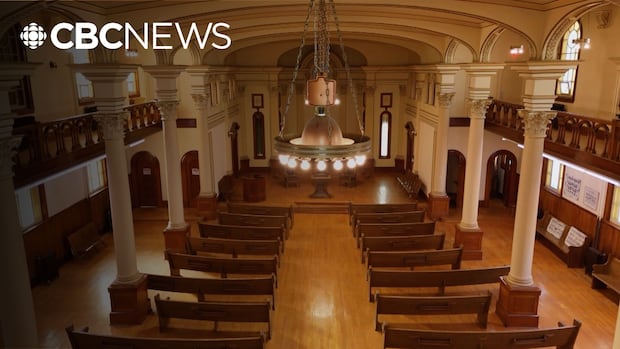
The city of Gravelbourg wants to save its century-old convent. The building is free, as long as the right person comes along with the right idea and resources to give it a new life.
What the city would really like to see is a housing project, something that would meet what Haug sees as a real need in this community, as it is in other parts of Canada.
“You’ll never see anything this size again. It’s original,” he said.
History in the here and now
There’s something improbable about the beauty of Gravelbourg’s buildings: that’s what surprised Toos Giesen-Stefiuk when she and her family moved to this city from Holland in 1981.
“The first time I went to the cathedral I thought, ‘What were they thinking, building something so beautiful in the middle of the prairies?’” he said.
She has now become a great appreciator and promoter of Gravelbourg history. He joined the museum board and has been raising funds for more than 20 years to restore and maintain a historic grain elevator in town.

Giesen-Stefiuk also served on the Friends of Gravelbourg Convent committee, a volunteer group that put together a proposal to convert the convent into a 42-unit housing development in 2019, at a cost of $15 million.
The project never found the money it needed to move to the next phase. But with housing identified as a major need across Canada, residents are hoping the time is right to move the plan forward.
Giesen-Stefiuk knows how iconic and important historic buildings can be and how much they mean to the psyche of a place.
“Growing up in Holland as a girl, there were windmills and they weren’t used anymore and they were being torn down until someone said, ‘We should keep some,’” she said. “And who doesn’t know the windmills in Holland?”
Walking through the empty halls of the century-old convent building in Gravelbourg, with bright light flooding in and high ceilings, Giesen-Stefiuk and Lepage see nothing but potential.
“And I think we can’t give up on that,” Lepage said. “This building is going to be here. [after] You and I are going to be alive, so we better make a decision: we are going to do something about it. I hope we can.”