



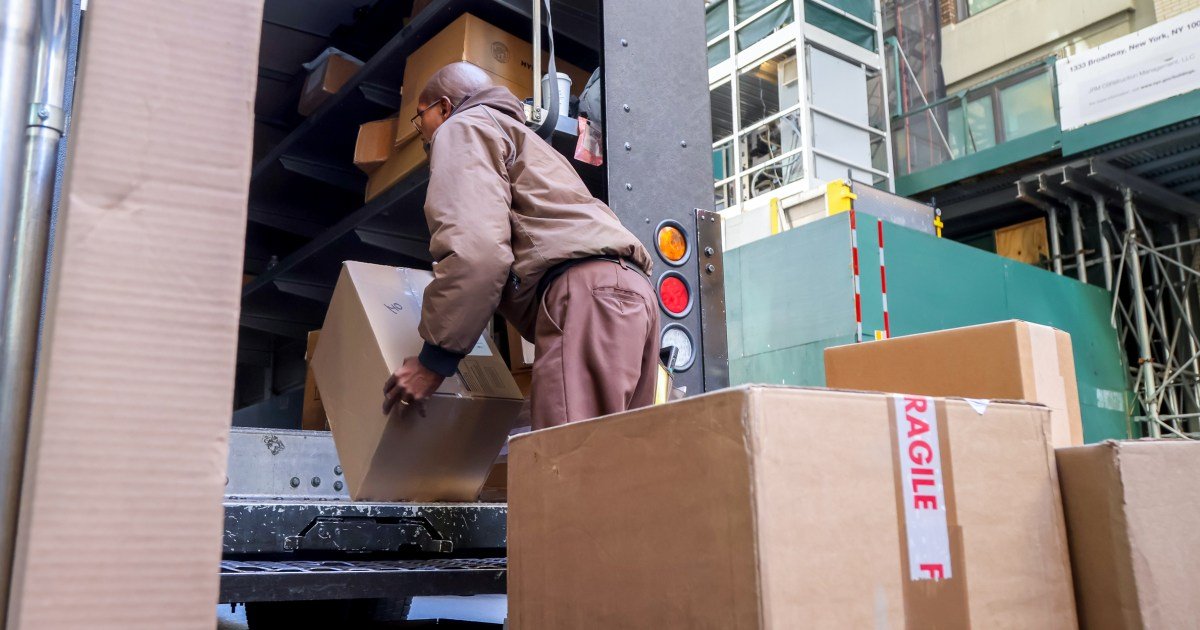
If you order products from abroad this holiday season, you could end up with an unwanted surprise: a costly customs duty bill.
This is the first holiday shopping season since the Trump administration made a major change to customs rules, expanding tariffs and customs fees to low-value packages that had long been exempt.
Since the new policies went into effect in late August, shoppers have reported being hit with surprise tariff charges on everything from carpets and computers to vitamins, sometimes costing hundreds of dollars.
As the busiest shopping season of the year begins, the stakes are high for both consumers and retailers.
The National Retail Federation estimates that U.S. holiday sales will surpass $1 trillion for the first time this season, and Adobe Analytics expects shoppers to spend a record $253.4 billion online this holiday season.
Shoppers purchasing gifts abroad should be prepared to pay tariffs before they can put their gifts under the tree. And those disputing an unexpected tariff bill should be prepared for a back-and-forth with major carriers that could last months as late payment charges pile up.
The tariff bill of $657
Bonnie Hardy-Compagno thought she would pay a standard 15% import duty from Europe when she ordered $431 worth of skin care products shipped from Belgium in late August.
Instead, when her package arrived via UPS in September, she was told she owed customs charges and fees in excess of the items’ value.
“I was very surprised when it showed up and the delivery driver told me, ‘It’s going to cost $657 to pick up your package,’” Hardy-Compagno said.
Hardy-Compagno rejected her package of skin care products and contacted UPS for clarification.
According to forms and emails it received from UPS, the shipping company said facial creams and serums it ordered had triggered a 200% tariff because they contained aluminum that was from Russia or an unknown country, as well as a separate 50% tariff for steel.
“It’s chaos trying to figure it out,” he said. “I’ve been calling at least once a week for two months. I’ve been emailing.”
“They finally sent me a form to fill out about the amounts of aluminum in the product, which I have no idea about,” he continued. “If you look at the product to see the ingredients, it’s just the ingredients that are in the skin care product.”
Last month, UPS sent him another bill for a $65 late fee. He said the company had also sent the bill to collections.
“At this point, I think, ‘It would have been cheaper for me to fly to Paris,’” Hardy-Compagno said.
Ripple effects around the world
For nearly a century, low-value packages have been allowed to enter the United States duty-free, under what is known as the “de minimis” exemption. Since 2016, that threshold value has been $800.
But this summer, President Donald Trump ended the exemption, saying it had been used to bring illegal drugs, including fentanyl, into the United States. As of August 29, low-value packages sent to individuals have been subject to the same tariffs and fees as large imports of commercial shipments.
The change is part of a larger push by the Trump administration to reshape global trade with an ever-changing mix of general tariff rates for U.S. trading partners and separate tariffs for specific products and materials.
The president has said his tariff-based economic policy will boost domestic manufacturing and improve the U.S. economy in the long run.
But in the meantime, American businesses and consumers are paying a price.
Many American retailers have decided to increase their prices to account for these higher import costs.
Some international companies have stopped shipping to the United States entirely, saying it is not financially viable to pay large tariffs to ship small items.
And several major companies — including Costco, cosmetics giant Revlon and eyewear maker EssilorLuxottica — have sued the Trump administration over the tariffs.
Chaos at customs
New requirements for smaller packages have trapped consumers in a customs nightmare.
Thousands of packages each week are stuck in customs limbo at global shipping centers across the country.
UPS, the world’s largest shipping company, has told some customers that it has been “dumping” their packages.
Packages that clear customs and reach customers can still arrive with high tariff prices. And shipping companies also often charge additional processing fees.

Factors that influence a shipment’s eventual tariff charges include “where it comes from, what it’s made of and how the finished product is classified,” said John Pickel, vice president of supply chain policy at the National Foreign Trade Council.
But these questions are more complicated than they seem.
In a statement to NBC News, UPS said, in part: “UPS agents are highly trained and use sophisticated technology to ensure accuracy in the calculation of the appropriate duties and fees owed. If you believe there is an error in the calculation of the duties and taxes applied to your U.S. import shipment, you may contact the UPS billing group using the number listed on your UPS billing invoice or contact the UPS Post Entry Department.”
“Our agents are working hard to address each customer’s inquiries as recent changes in rate policy have led to a significant increase in the number of brokerage-related inquiries,” UPS added.
How to avoid surprise tariffs
Retail experts recommend that anyone planning to order products from abroad this holiday season be careful.
“If you order from overseas, the first thing I would do is look for that item somewhere else to see if they have a warehouse in the U.S., another retailer,” said Trae Bodge, purchasing expert at truetrae.com.
“I’m very nervous about ordering overseas right now, because everything is up in the air,” she said. “But if you must have that item and it’s only available overseas, read the fine print, especially at checkout.”
Consumers should watch for labels that indicate “duty paid delivery” or DDP. Typically, this means that shipping costs have been included in the final price of the item.
Bodge also recommended looking for any mention on retailers’ websites about tariffs, taxes, shipping fees or other charges.
Buyers can also check if the websites list where items are shipped from and contact retailers directly for any clarifications or additional details.