

Many people in the Somali community say they feel fearful and angry after US President Donald Trump’s tirade against Somali communities in Minnesota.
At a Cabinet meeting on Tuesday, Trump called on Somalis “garbage” and said that they “contribute nothing” to the country. He called Somalia “barely a country” and said he doesn’t want people from the war-torn African nation in the United States.
Trump made his comments shortly after reports that federal authorities are preparing a targeted immigration enforcement operation in Minnesota, focusing on Somalis living in the United States illegally, according to a person familiar with the planning.
In both the United States and Canada, where there are large Somali populations, some members of the Somali community say this has sparked fear, anger and renewed concerns about safety and discrimination.
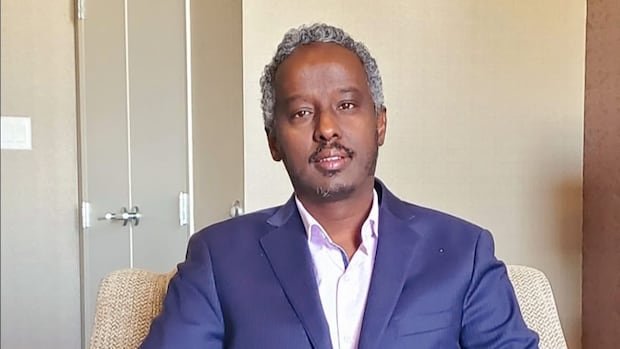
Ahmed Abdulkadir, 50 years old, partnerA community advocate in Edmonton, he says Trump’s message is alarming and he worries the narrative could put even immigrants and law-abiding citizens at risk.
“Racism, racism, that’s what’s happening,” he told CBC News.
“I worry that someone might watch the news and assume they’re a bad person… it could have profound consequences.”
US President Donald Trump launched a three-minute tirade against immigrants from Somalia during a Cabinet meeting on Tuesday, calling them “trash” and saying “we don’t want them in our country.” Minneapolis Mayor Jacob Frey said the Somali community has been an economic and cultural blessing to the area, home to about 80,000 people of Somali origin.
‘People feel insecure and live in fear’
Somalis have been fleeing the Horn of Africa nation for decades, since the fall of dictator Siad Barre sparked clashes between warlords and a broader civil war. Some also fled following the rise of the al-Qaeda-linked extremist group Al Shabaab in the mid-2000s, and others arrived through government-sponsored refugee programs.
There are 65,555 people from Of Somali descent living in private homes in Canadaaccording to the 2021 census. As Canada Public Safety notes, Canada has one of the largest Somali populations in the Western world and many live in Edmonton.
“We are resilient people. We will survive. Strong American Somalia and Canadian Somalia communities will come together and come together. That’s what’s going to come out of this,” said Edmonton’s Abdulkadir.
There were an estimated 260,000 people of Somali descent living in the United States in 2024, according to the Census Bureau’s annual American Community Survey. The largest population is in Minneapolis-St. Paul, home to about 84,000 Somali residents, most of whom are U.S. citizens.
In Minnesota, journalist and community advocate Awil Shire Wariye says women and girls who wear the hijab have reported being chased in the streets. He says both individuals and groups are targeting members of the Somali community.
“This situation has reached a point where people feel unsafe and live in fear, which does not reflect the values of society and human rights that the United States” prides itself on, he told CBC News.
Other Somali leaders said Wednesday they had received anecdotal reports about community members detained by federal agents, according to The Associated Pressbut I had no details. Federal immigration officials did not immediately respond to AP requests for comment.
‘A basis for dehumanizing a community’
Zaynab Mohamed, 28, a Minnesota state senator and the first Muslim woman elected to the state senate, says Trump is seeking to divide the country.
“He’s saying things that are absolutely false and using them as a basis to dehumanize a community that has built Minnesota’s economy here,” he said.

People of Somali descent have become regular residents of the Twin Cities, opening businesses and revitalizing neighborhoods of empty shops.
They are also increasingly prominent politically, serving in the state Legislature and on the city councils of Minneapolis and St. Paul.
Democrat Ilhan Omar, a member of the US House of Representatives, is a frequent target of Trump, who on Tuesday called her “trash.”
Mohamed, who moved from Somalia at the age of nine and is now a US citizen, says recentt Immigration and Customs Enforcement (ICE) The operations have indiscriminately targeted Somali neighbors, including citizens. YesHe says he still stops and questions Somali men who are U.S. citizens and have U.S. IDs and passports.
“They are targeting those who look Somali,” Mohamed said.
He says he is concerned this could set a dangerous precedent for other minority groups and the possibility of violence against minorities.
“This is what this is creating. This is creating a level of human security.”

Abdi Samatar, a Somali American and professor at the University of Minnesota, says it is “disgraceful, unpresidential and quite unfortunate” to hear the language that US President Donald Trump has used against his community coming from the Oval Office. He says some students of East African origin have been afraid to come to class, but the community at large has supported them.
Scared but united
In recent years, the Somali community has also fought stereotypes after dozens of people were arrested in connection with schemes to defraud social service agencies in what some officials say could total hundreds of millions of dollars. Some of those arrested were Somali American citizens.
Minnesota Gov. Tim Walz, in an interview late last month with the New York Times, said the programs were “created to transfer money to people” during the pandemic. As a result, he has said, his administration may have made a mistake of generosity.
Walz said Thursday that an audit due to be completed by the end of January should give a better idea of how much money had been stolen. He also said his administration is taking aggressive steps to prevent additional fraud.
Last week, Trump called Minnesota “a center of fraudulent money laundering activity” after a report by a conservative activist said fraudulent money flowed to al-Shabaab, an al-Qaeda affiliate that controls parts of Somalia. But there has been little or no evidence to prove such a link, and federal prosecutors have not charged any defendant with supporting terrorists.
On Thursday, Walz said Trump had smeared all Minnesotans and that his expressions of disdain for the state’s Somali community, the largest in the United States, were “unprecedented for a president of the United States. Today we have little kids going to school and their president called them trash.”
For many Somali Americans, Trump’s comments carry emotional weight.
Abdirahman Warsame, 27, executive director of Generation Hope, a non-profit organization dedicated to addressing addiction and mental health in the East African communityand lifelong Minneapolis resident, says he was “shocked but not surprised” by the president’s words.
“He called us trash and said we don’t belong here,” he said.

Warsame says he is also concerned that ICE operations could devastate families.
“The president has signed the death warrant for several Somali citizens and immigrants,” he said. “This is going to hurt a lot of people.”
Still, Warsame says fear doesn’t stop the community from staying together.
“The positive side of this is that this only makes us stronger,” he said.
“We are afraid,” Warsame said. “But we are united.”