Listen to this article
4 minutes estimated
The audio version of this article is generated using text-to-speech, a technology based on artificial intelligence.
Natural Resources Minister Tim Hodgson faced a failing grade and a canceled speech at this week’s Assembly of First Nations meeting as pushback grows among British Columbia chiefs over the government’s new energy deal with Alberta.
Some British Columbia chiefs say the Build Canada Act is failing its first test, accusing the Liberals of dodging critical questions about First Nations consent for an oil pipeline project from Alberta to the West Coast.
“If I had to grade their commitment to Coastal First Nations and BC First Nations, it would be an F,” said BC Regional Chief Terry Teegee of the Assembly of First Nations.
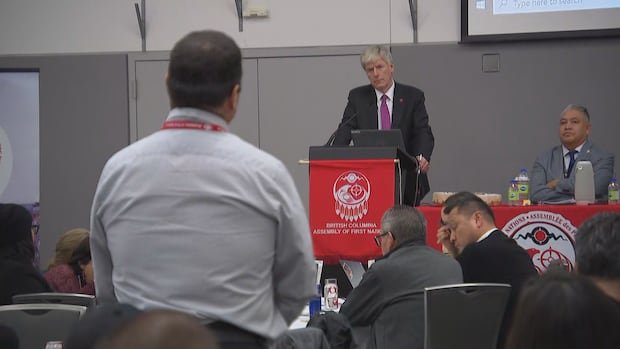
Hodgson had been on the agenda to speak at the Assembly of First Nations (AFN) special chiefs’ meeting in Ottawa on Thursday. But this morning his name wasn’t on the calendar.
His office told CBC News that “there was a change in the agenda by the federal government organizers,” specifying that it was not Hodgson’s office that made the change.
The minister is facing heavy criticism from chiefs and his own colleagues for the way he is approaching First Nations over the memorandum of understanding the federal government signed with Alberta and how a potential pipeline would affect British Columbia.

Instead of addressing the assembly, Hodgson met on the sidelines with the AFN’s BC regional group. These meetings are generally private, but BC bosses and members opened the door to the media shortly after they began airing their concerns.
“What he didn’t answer is what will happen if some First Nations say yes, like the Alberta First Nations, for example, and the British Columbia First Nations say no. Are they going to impose the project on us? And he just stepped aside and said, well, that’s a premature question,” said Merle Alexander, a member of the Heiltsuk First Nation in British Columbia.
“That gives us no comfort.”
Hodgson told bosses he will be “on the north coast [of B.C.] soon.” He reiterated that there is still no pipeline on the table.
“Indigenous people on the coast care deeply about their lands and what we talked about today was a process about how the projects will be developed,” Hodgson said. “They will be developed in partnership with First Nations, and that is the commitment of the Building Canada Act.”

Earlier this week, the AFN passed a unanimous resolution calling on the federal government to withdraw from the memorandum of understanding (MOU) with Alberta that sets out conditions for an oil pipeline to British Columbia’s northern coast, including a possible exemption to the ban on oil tankers on that coast.
“This MOU is a slap in the face to British Columbia,” Teegee said. “They made this deal without BC in mind.”
Finance Minister François-Philippe Champagne defended Hodgson on Thursday.
“Believe [Hodgson] has done the work that is important, that the Major Projects Office respected. I think compromise is the right thing to do,” Champagne told reporters after addressing the assembly later that day.
“Nations want to be heard, nations want to be [involved]”Nations want to build the future together.”
But some members of British Columbia’s First Nations fear the government could proceed without them, even after consultations are held.
“You can expect there to be fierce and active litigation. There will be significant civil unrest along the corridor,” Alexander said.
“British Columbia First Nations, when they say no, they mean it. So we’re going to see significant and forceful opposition.”