


Listen to this article
4 minutes estimated
The audio version of this article is generated using text-to-speech, a technology based on artificial intelligence.
If all goes as planned, at 6 a.m. Saturday the workers at the IWK Health Center will become the test case of generational change in Nova Scotia’s health care system.
That’s when the Halifax-based children’s hospital will become the first site in the province to implement a new electronic medical records system that officials say will make patient care safer and more efficient, while improving workflow for providers.
“This has been a long time coming and a lot of work has gone into making this transition,” Dr. Krista Jangaard, IWK president and CEO, said during an interview Thursday.
The new system has taken years to develop and, before its announcement, the continued reliance on multiple systems (some of which are still paper-based) was seen as an impediment to attracting healthcare professionals.

But almost three years ago, the Nova Scotia government signed a $365 million contract with Oracle Cerner Canada to design, build and maintain a system that enables an electronic records system that follows patients no matter where they go and is accessible to anyone providing care.
There have been delays getting to this point and release dates have been pushed back several times. Nova Scotia Health has changed its own plans several times about when it will begin operating; The most recent update is that all sites in the core zone will launch on May 9, 2026, with the remaining zones following on dates yet to be announced.
With the launch imminent for people who work at IWK, Jangaard said there is a mix of anticipation and nerves, something she said people at other sites who have gone through similar transitions have told her is to be expected.
Training for the change began this fall and Jangaard said all doctors and nurses working at the site have completed that work and 94 percent of the remaining staff have also been trained, and those who have not yet gone through the process are either on leave or not scheduled to work at the site for the next three weeks.
A tool that supports care
After a midnight Saturday process to move all patients already in the hospital or registered in the emergency department to the new system, Jangaard said there would be a final status check at 5 a.m. before all aspects of the health center made the switch.
“We will go towards the so-called big bang,” he said.
The only change patients should notice is that more people are working in the hospital that morning. There will be support staff who are experts in the new system, along with additional healthcare staff who are more familiar with the system and who can assist colleagues across the hospital.
“They don’t want anything that will interfere with providing good care,” Jangaard said, “so providing support that helps them learn that system and get into the real world as quickly as possible is key.”
Taking advantage of other systems
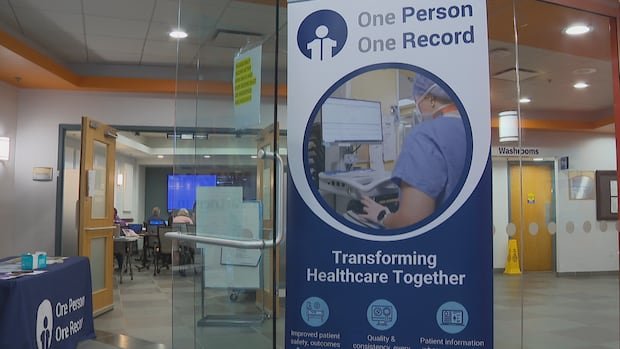
One Person One Record is a tool that supports care and Jangaard said that support will mean connectivity that the province’s health-care system has never had.
The new system will mean the creation of a single digital record that follows patients where they go, meaning patients will no longer need to recite their entire history every time they see someone and providers will know precisely what tests have been ordered without having to search through multiple databases.
The benefits will become even more evident as more sites come online over the next year, Jangaard said. Over time, IWK staff will be able to access a patient’s record even before their arrival if they have been seen by a provider elsewhere in the province.
“That’s number one,” Jangaard said.
“It’s not a separate episode of care: you have a journey of care and it can be connected across geographies and providers.”
MORE TOP STORIES