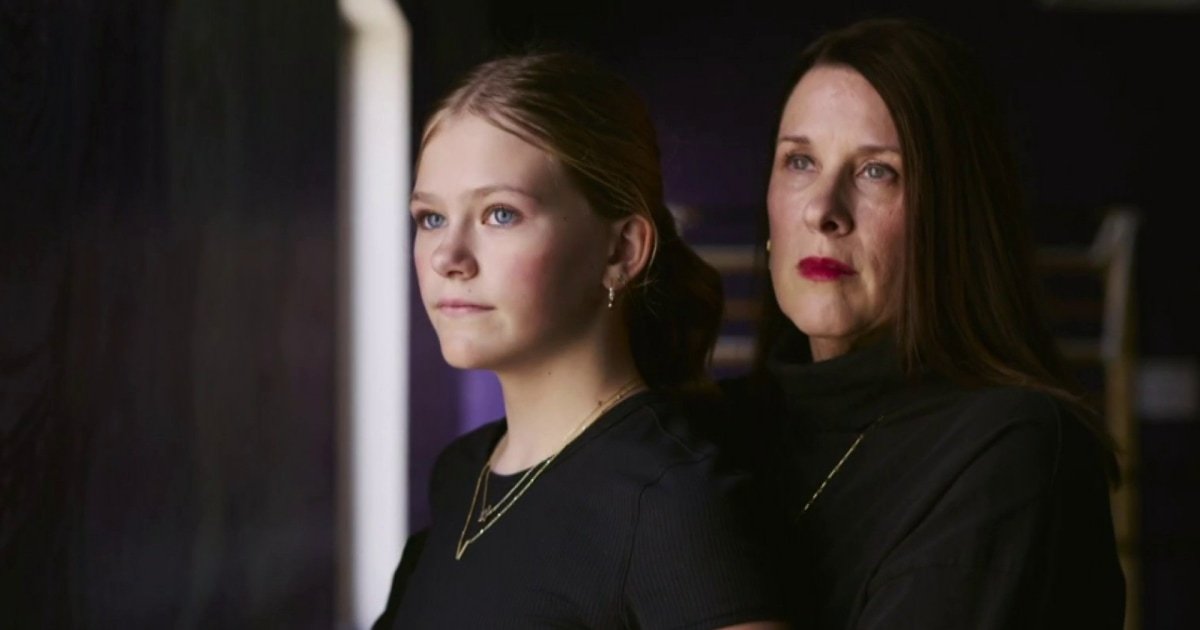



LOS ANGELES — Lila Byock’s son had always been good at math. But when he started sixth grade last year, he began to bring home D’s and F’s. It crushed his self-esteem. His teachers told Byock that he clearly understood the material, she said, but he just couldn’t stay on task on his school-issued Apple iPad.
Her son’s school, like many in the Los Angeles Unified School District and across the country, provided an iPad to each student for use throughout the school day, even during band and gym class. The iPad program, which ramped up during the Covid pandemic, was meant to give kids a technological leg up and help track students who are falling behind. But Byock said her son revealed that he used the iPad during school to watch YouTube and participate in Fortnite video game battles.“It makes no sense to me,” Byock said. “We’ve banned the cellphones, but it doesn’t matter, because the kids are using the school-issued devices in exactly the same way.” In February, the district’s ban on use of personal devices, including smartphones and smartwatches, went into effect.
Byock began speaking with other parents of elementary and middle school children, invited a group of them to her house for wine and cookies and heard stories similar to hers from parents who had been trying to raise their kids with as little screen time as possible. One mother described how her 6-year-old son had repeatedly wet himself in class when he got fixated on activities with his tablet, and another said her teenage son had gotten sucked into communicating with strangers online via popular websites and forums and at one point ran away from home with the school-issued iPad.
Byock created a parent coalition called Schools Beyond Screens, which is organizing in WhatsApp groups, petition drives and actions at school board meetings and demanding meetings with district administrators, pressuring them to pull back on the school-mandated screen time. The pushback has reached a fever pitch this month after a series of tense meetings with school officials about the topic. Los Angeles Unified is the first district of its size to face an organized — and growing — campaign by parents demanding that schools pull back on mandatory screen time.
The discontent in Los Angeles Unified, the second-largest school district in the country, reflects a growing unease nationally about the amount of time children spend learning through screens in classrooms. While a majority of states prohibit children from using cellphones in class, 88% of schools provide students with personal devices, according to the National Center for Education Statistics, often Chromebook laptops or iPads. The parents hope getting a district that has over 409,000 students across nearly 800 schools to change how it approaches screen time would send a signal across public school districts to pull back from a yearslong effort to digitize classrooms.
“I basically have reoriented my entire life and gone down this rabbit hole, because it’s so crazy to me what’s happening and that we’re just letting this happen,” Byock said.
District officials say that on average, students spend less than two hours a day on screens, according to the tracking software used by the district’s Chromebooks, though it doesn’t track iPad usage. Superintendent Alberto Carvalho also cautioned at a recent board meeting “that restricting to some means eliminating,” echoing a doctrine dominant in education that public schools should ensure students of all socioeconomic backgrounds are equipped for a digital-first world.
“Do we have a problem specific to digital tool addiction in America? Yes, we do,” he said at a Sept. 9 meeting. “Schools are not the reason. Not even close. Parental responsibility is very much a part of this equation. Period.”
Do you have a story to share about technology in education? Contact Tyler Kingkade
A district spokesperson said in a statement that teachers “have the flexibility to select from a variety of approved and vetted instructional resources based on the needs of their students,” as long as they follow guidelines. When concerns crop up, the spokesperson added, teachers should work directly with families to “adjust as appropriate according to students’ needs and instructional best practices.”
Students in grade levels as low as kindergarten are provided iPads, and some schools require them to take the tablets home. Some teachers have allowed students to opt out of the iPad-based assignments, but other parents say they’ve been told that they can’t. Parents can also opt their children out of having access to YouTube and several other Google products.
Nick Melvoin, the Los Angeles school board member who wrote the 2024 phone ban resolution, the first of its kind for such a large district, said he has been considering proposing to prohibit students’ using devices until second grade after having heard from concerned parents.
Melvoin said that some schools are misinterpreting districtwide policies about learning assessment software and that the district needs a better accounting of how schools are using devices.
“The cellphone ban was almost rudimentary — like, let’s just get rid of them,” he said. But with educational software in class, it’s not as simple, “because then if the pendulum swings too far; we’re doing kids a disservice.”
When Los Angeles Unified began providing personal laptops and tablets to students a decade ago, district leaders described it as a “civil rights issue” to get children of all backgrounds on equal technological footing. The billion-dollar 2014 initiative to give tablet computers to everyone became a scandal after the bidding process appeared to heavily favor Apple, and it faced criticism once it became clear that students could bypass security protocols and that few teachers used the tablets.
Currently, the district leaves it up to individual schools to decide whether they want students to take home iPads or Chromebooks every day and how much time they spend on them in class. Students are required to complete “Digital Citizenship instruction,” which includes lessons about developing healthy habits around screen time and media consumption. The district also uses GoGuardian monitoring software to keep tabs on how students use devices.

In 2022, Los Angeles Unified started requiring students to complete benchmark assessments on i-Ready, educational software widely used in California schools. On i-Ready, students complete interactive math and reading assignments with colorful animations on either iPads or Chromebooks. The program warns parents and teachers if students are falling behind on grade-level expectations.
Armaghan Khan, a science teacher at Cochran Middle School, said it’s difficult to ensure students are using i-Ready as it’s intended. They will use answers from artificial intelligence chatbots, he said, and although Khan has GoGuardian to monitor what students are doing on Chromebooks in real time, they get around that by creating alternative user profiles on their computers. And on days that administrators have required him to carve out time for i-Ready, because it doesn’t include his subject, that’s time taken away from science instruction, he said.
GoGuardian, the company that makes the monitoring software, said districts can change settings to prevent students from logging into Chromebooks with non-school-issued profiles. “Generally speaking, students should not be able to log into a Chromebook using a non-school-issued profile if the district has implemented the recommended settings in their Google Admin Console,” a spokesperson said. “More commonly, when students attempt to bypass filtering or monitoring, they do so by using proxies,” the spokesperson continued, referring to proxy servers, which allow internet users to conceal their locations and sometimes sidestep certain restrictions.
Khan, a member of the bargaining committee for United Teachers of Los Angeles, said the union is trying to address mandatory classroom technology in its next contract.
“I know these tools do have a place in the class,” he said, “but the way we’re deploying them right now, it’s nowhere close to that ideal.”
Parents have reported a myriad of issues associated with using the iPads.
Kate, a mother of two boys in North Hollywood, who spoke on the condition that her last name not be published to protect her child’s medical privacy, believed the mandatory i-Ready time created a health issue for her first-grade son.
This fall, Kate said, her son’s elementary school notified her that he wet his pants during iPad time, which was required for an hour a day to complete i-Ready assignments. He’d never done that before at school or home, she said, but it happened four times over a month. Her son cried after each incident and asked, “what’s wrong with me?” according to emails Kate exchanged with the school.
“I went ballistic, because this shouldn’t be happening,” she said. “I felt like this was becoming a humiliation ritual.”
Kate said she and her son’s pediatrician believed the time on the iPad, when he had to use headphones for on game-based quizzes, were overstimulating and made it difficult for him to notice normal bodily signals. The teacher agreed to limit her son to only 20 minutes a day on an iPad or a Chromebook, and he hasn’t had an accident since, Kate said.
District officials tell schools that students should use i-Ready for only 45 minutes per week in each subject. However, Maria Nichols, president of the Associated Administrators of Los Angeles, the principals’ union, said the district will “pester” her members to show improvement in reports. The result, she said, is that it’s now normal to walk into a classroom and see all the students staring at devices with headphones on and no direct teaching or conversation occurring.
The i-Ready software generates new and unique questions for students based on their histories and user profiles using an algorithm, but parents and teachers are unable to see what children are asked, in part because the company that makes the program considers them proprietary information.

“In order to protect a private company’s math problem, there’s this black box of my kids’ education now that I don’t have access to and the teacher doesn’t have access to,” said Anna Moench, a mother in the Mount Washington neighborhood. “In order to help figure out how I can best support my child, who is autistic, I need accurate information about what’s happening at school.”
A spokesperson for Curriculum Associates, the company that makes i-Ready, said the questions aren’t available for review to “protect the accuracy and fairness of the assessment.” The spokesperson also said that the company recommends that students spend less than two hours per week using i-Ready and that “digital learning tools should make up only a small part of a student’s day.”
Karla Estrada, the district’s deputy superintendent for instruction, said that the district prioritizes responsible device use and that its strategic use of technology has contributed to recent testing gains. She said the district headquarters would work with schools to ensure they aren’t disregarding the district’s guidance about how much time children should spend on i-Ready.
“Technology is a tool, but it is not what drives our instruction,” she said. “The day-to-day between the teacher and the student and the content in which they’re engaged in matters most.”
Around 300 parents attended listening sessions the district held last month about technology in the classroom. Nearly all who spoke criticized how much screen time schools gave their children in class, pointing to ways their behavior and grades suffered as students watched YouTube and played Minecraft.
“You’re basically giving them the cocaine, and then you’re telling the teachers that they have to figure out how to get it out of the kids’ hands,” one mother said. “That’s bananas.”
Several also asked district officials to explain why children as young as kindergartners were asked to sign a form to use devices in which they promised they would honor intellectual property law and refrain from meeting people in person whom they met online.
“Is it possible for children to meet people over the internet on school-issued devices?” one father asked. The district officials declined to answer, saying it was meant to be a listening session.
The district plans to create a committee that will consider feedback next year from parents on education technology.
Byock, the leader of Schools Beyond Screens, which has chapters at 20 area schools, said she’s gratified that the district is taking those steps, but wants to see it take concrete steps to change how devices are used in classes.
In the meantime, she has opted her son out of i-Ready, meaning he spends less time using devices at school. Instead, Byock said, her son’s English teacher offered to do a one-on-one novel study with him when the other kids are doing i-Ready.
“Which is incredible,” Byock said, “because now he’s actually getting the kind of education that I wish all the kids were getting.”