


Listen to this article
Dear 3 minutes
The audio version of this article is generated using text-to-speech, a technology based on artificial intelligence.
A national organization that represents more than 100 Indigenous service centers in urban centers says it doesn’t know how much federal funding it will receive next fiscal year.
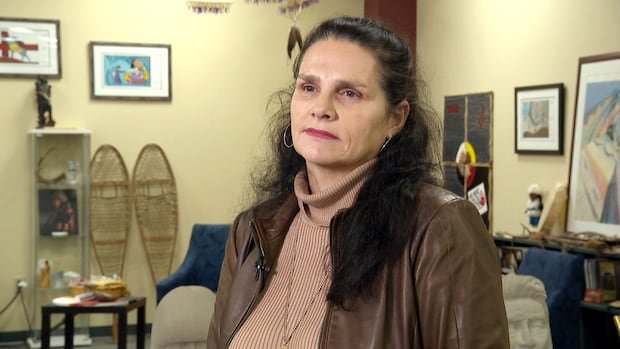
“That’s terrifying to me, to friendship centers across Canada,” said Pamela Glode-Desrochers, president of the National Association of Friendship Centers and executive director of the Mi’kmaw Native Friendship Center in Halifax.
“What we’re doing are all basic social service programs and without them, that infrastructure, if it goes away tomorrow, we’re going to have community members that are going to be lost.”
Core funding for both the National Association of Friendship Centers (NAFC) and the Ontario Federation of Indigenous Friendship Centers has been provided through the Urban Programming for Indigenous Peoples (UPIP) program since 2017.
The program will end in March 2026.
Glode-Desrochers said that while funding is expected to continue, the NAFC does not know what the program will look like.
“The uncertainty and not knowing the next steps is probably what is really raising some alarms about the friendship centers on the ground,” Glode-Desrochers said.
The 2021 census reported that more than 60 per cent of Canada’s Indigenous people lived in urban centres.

Friendship centers provide programming and services for indigenous people in cities and towns. According to the NAFC, friendship centers provide services that reach more 1 million urban indigenous clients each year.
Glode-Desrochers said friendship centers become a home away from home for their clients.
“We’re their extended family. That’s where they’ll come to see their aunts; that’s where they’ll come to see an elder,” Glode-Desrochers said.
“It’s a core piece of infrastructure that we need to invest in and not cut.”
About 90 per cent of NAFC’s funding comes from the federal government, which then distributes to provincial friendship center associations.
Celeste Hayward, executive director of the British Columbia Association of Aboriginal Friendship Centres, said not knowing the details of what’s to come has made planning difficult.
“We deal with housing, we deal with homelessness, employment and training are a big part of what we’re doing, and we’re doing adult education. We’re doing justice programs. We’re doing end-of-life care,” Hayward said.
“You can’t start planning yet.”
New financing model to come, says ISC
The 2025 Federal Budget shows zeros in the UPIP program columns after the end of the 2024-2025 fiscal year.
A statement from Eric Head, spokesperson for Indigenous Services Canada, said there will be money for friendship centers next fiscal year.
“It is important to note that while Budget 2024 funding will run out, the program will not expire but will instead move to a new distribution model for the program’s ongoing annual funding of $27.5 million,” Head said in the statement.
The statement added that the National Association of Friendship Centers and the Ontario Federation of Indigenous Friendship Centers will be the sole beneficiaries of the $27.5 million program.
The 2024 budget pledged $60 million over two years, starting in 2024-25, to support friendship centers. According to the federal government, UPIP provided more than $70 million in 2024-25 to the network of 120 friendship centers across the country.