


Listen to this article
Dear 5 minutes
The audio version of this article is generated using text-to-speech, a technology based on artificial intelligence.
Coltan plays a very important role in our daily lives. But most of us have probably never even heard of this rare mineral, let alone have any idea about its devastating impacts on those who mine it for us.
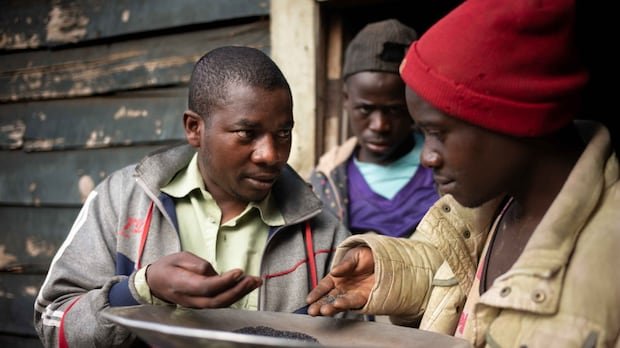
Coltan (short for columbite-tantalite) is a metallic mineral used in a variety of modern innovations, from cars to smartphones and laptops. an estimate 80 percent Of the world’s supply of coltan comes from the Democratic Republic of the Congo, but communities living in coltan-rich areas (and in particular, those who risk their lives mining it by hand) are hardly reaping the benefits. Instead, they are caught in the middle of a vicious conflict involving militia groups, mine operators and the government.
This struggle is at the center of French filmmaker Jean-Gabriel Laynaud’s documentary 2025. Of mud and bloodwhich inaugurates the fifth edition of the Vancouver International Black Film Festival (VIBFF) on December 5th.
“God gave us a paradise,” says a Congolese interviewed in the film. “But we live in hell.”
The film is a bold example of VIBFF’s mission to ensure Black stories have a lasting place on the big screen.

“When a festival not only shows beautiful cinema, but also tries to find meaningful films and tries to talk about all those topics that are so important today and that are left aside, it’s really wonderful,” Leynaud says by phone from Paris. “And then, when a festival like that wants to put you in front [of its programming]you really think, ‘Okay, we’re getting somewhere.’ We are fighting together in the same direction to change some of those things that need to be changed.’”
While Leynaud is not black, he has dedicated much of his film career to telling stories about Africa. He has made more than 20 films on the continent and says the region around the town of Numbi, the epicenter of Congo’s coltan supply, “has moved me deeply, very deeply.” It took him seven years to make Of mud and bloodhe says, largely because he was told time and time again that no one was interested in the topic.
“What I heard was: ‘No one cares about this suffering Africa,’” he says. “And I said, ‘It’s not just the suffering in Africa, it’s our history, because it’s our daily lives that depend on [the African people who mine coltan]and we don’t know them.’”

putting Of mud and blood In its programming, the VIBFF is doing its part. Now it is the public’s turn to show up, sit down and bear witness.
“We are excited,” says the festival founder Fabienne Colasfilmmaker, actor and producer born in Haiti and based in Montreal. “We are waiting for everyone, especially people who are not black, because we know that they do not have easy access to black films or realities. The festival is for everyone.”
Colas created the VIBFF to promote greater diversity in film. Her non-profit arts organization, the Fabienne Colas Foundation, also organizes black film festivals in Ottawa, Calgary, Montreal, Toronto and Halifax. The fact that the Vancouver edition has celebrated its fifth anniversary, he says, is no small feat.
“For a black film festival, it’s a lot,” he says. “Black organizations still face funding issues and all kinds of other challenges. So reaching five years is a big milestone.”
A report from 2020 conducted by the Network for the Advancement of Black Communities and Carleton University’s Nonprofit Philanthropy and Leadership program found that less than 0.1 per cent of Canadian foundation funding goes to Black-led organizations. as little as seven cents out of every $100 donated to Canadian charities goes to black causes.
Which is to say, the continued success of a Black-led organization like VIBFF is cause for celebration, especially as DEI initiatives continue to set back so much in the united states and here in canada.
SEE | The trailer for Of Mud and Blood:
In addition to showcasing Black stories, VIBFF also focuses on fostering Black talent within the film industry. This is particularly important, says Colas, in a city like Vancouver, where years of systemic erasure It means that many people I don’t know about the black history of the city..
“This festival is a place where people can not only meet, network, learn, be inspired and meet other film professionals,” she says, “but also discover where the opportunities are for black people in film today. So this is not just another festival, it is the necessary festival here in Vancouver. I am very proud of it.”
In addition to its diverse selection of film screenings, VIBFF also offers a series of industry talks and educational opportunities. Colas is particularly proud of Being black in Canada (not to be confused with the CBC storytelling project of the same name). The initiative is a nationwide incubation program that provides mentorship to a group of promising Black filmmakers, culminating in screenings of their short films at festivals.
“I always say, ‘Don’t wait until you win an Oscar,’” Colas says. “Start supporting them right now.”
The fifth annual Vancouver International Black Film Festival will take place December 5-9 at the VIFF Center (1181 Seymour St.) in Vancouver. Some programming is also available online.