
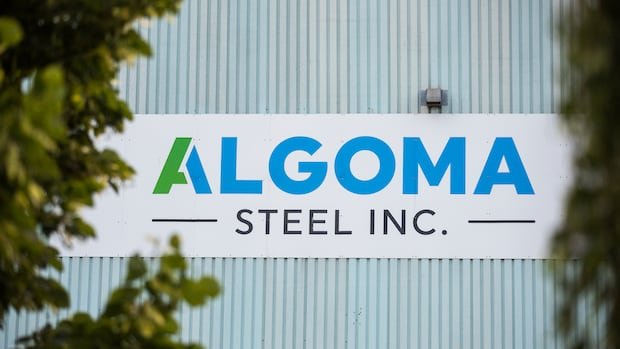
In September, the federal government boasted that it was acting “to protect Canadian steel jobs,” with its $400 million announcement. in loans tor Algoma Steel, based in northern Ontario.
The money would help him “adapt”t operations, remain competitive and, most importantly, protect the jobs and workers who drive this industry,” Finance Minister François-Philippe Champagne said in a statement at the time.
At the same time, the Ontario government said it would contribute $100 million of its own, meaning the steel producer would receive $500 million from the government.not money.
But on Tuesday, a little more than two months after those announcements, Algoma Steel said it was issuing 1,000 layoff notices to workers at its Sault Ste. Marie plant. Mary, Ontario. This raised questions about why the steel company was receiving millions from taxpayers. dollars.
However, some industry experts suggestgesture that he castng is going to be a major breakthrough technology that will dramatically reduce greenhouse gas emissions. And it’s all part of Canada’s cost of maintaining its steel industry, following punitive tariffs.
‘A strategic industry’
“Steel is a strategic industry. It’s something we want to make at home, but it’s something every country wants to make at home,” said Colin Mang, assistant professor of economics at McMaster University in Hamilton, an expert on the Canadian steel industry.
The $500 million was needed to keep the company afloat following U.S. President Donald Trump’s 50 percent tariffs on Canadian steel, Mang says..
“In the short term, because we’ve had this one massive disruption in the industry,” he said. “I think the government needs to support them and help them manage that transition as best they can.
“The company is experiencing cash flow issues as a result of the tariffs, but they still have all of these expenses that they are trying to cover in the short term,” he said.
“That’s what that money was for… to help them get back on their feet until they can readjust their production process so they can be cash flow positive.”
Bill Slater, president of United Steelworkers Local 2724, says there is anxiety among all workers at the Algoma Steel plant in Sault Ste. Marie. Mary, Ontario. Algoma Steel announced it plans to lay off 1,000 workers in March next year as it closes its blast furnace and coke production operations.
Money without guarantees
Still, Bill Slater, president of the Algoma Steel Local 2724 office and professional union, says the loans should have been tied to maintaining employment levels.
“Because if you offer a company that amount of money, but tell them they have to maintain this level of employees to get it, they will look for ways to use those employees… and still make money,” he said.
“But our government continues to give money to businesses without having employment levels tied to loans or grants.”
In fact, the $500 million in loan guarantees were on top of the $420 million Algoma received in 2021.
In June of that year, then-Prime Minister Justin Trudeau said the steelmaker would receive up to $420 million in federal funding to help it purchase equipment to phase out its coal-fired plants and transition to cleaner electric arc furnace production technology.
“Government support has been generous,” said Peter Warrian, a economist at the Munk School of Global Affairs and Public Policy at the University of Toronto. “But at the end of the day you get a significant environmental improvement.”
“There is a long-term plan,” he said, adding it was the right thing for Ottawa to do.
With the new technology, the plant was expected to reduce greenhouse gas emissions by 70 to 80 percent.

“The government gave them money to incentivize them to try the technology,” Mang said.
However, operating electric arc furnaces, because they use more efficient technology, requires much less labor, meaning a plant requires fewer jobs, Mang says.
“If you can undercut everyone because you’re producing much cheaper than them, who wouldn’t want to buy from you?” Mang said.
“That was the idea that this would help really boost productivity in the Canadian steel industry.”
Still, there would be job losses. YoIn March, Michael Garcia, CEO of Algoma Steel, acknowledged in an interview with Village Media that the new technology would mean 1,000 fewer employees when both electric furnaces were operational, around 2029.
But the punitive impact of the tariffs caused the company to close.Shut down blast furnace and coke production operations about a year earlier than originally planned, leading to the layoffs announced Monday, Garcia said.
SEE | Algoma Steel CEO talks about layoffs:
“They can produce everything they need to satisfy the orders they are receiving now just with the new furnace,” Mang added.
Warrian said that if Algoma had been able to extend the blast furnace decommissioning period, the layoffs would have been more manageable. But because the company is in a liquidity crisis, “now they have to do it under the barrel of a gun.”
The government knew it, says the CEO
In an interview with CBC’s John Paul Tasker, Power and politicsGarcia was asked if the governments knew Algoma was considering major layoffs when they made the loans in September.
“I don’t think anyone would lend us $500 million without understanding the company’s business plan, without understanding what the tariff impact was on the company,” Garcia said.
He added that everyone at Algoma Steel, “and certainly the government,” has understood since 2022 that they would close their blast furnace and coke oven operations when they transition to Production of electric arc furnaces.
In an email statement, John Fragos, Champagne’s press secretary, said the government has worked “in close and ongoing collaboration with partners like Algoma.”
He said the support provided earlier this year will go towards supporting Algoma during this transition period and expanding its new electric arc furnace.