


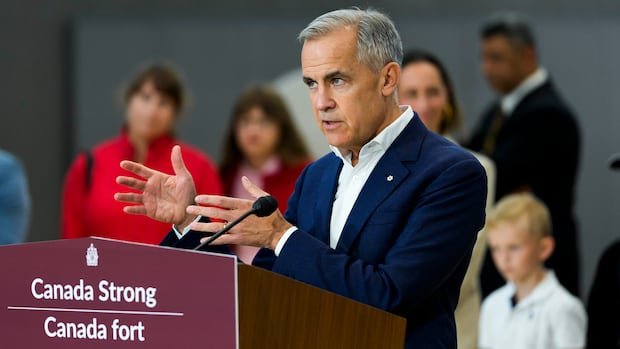
Prime Minister Mark Carney said on Friday that the fate of oil and gas producers’ emissions cap depends on other efforts to reduce emissions, suggesting his government may be willing to scrap the policy, an apparent reversal from its pledge earlier this year.
Speaking to reporters in Ottawa, Carney was asked if he is considering removing the cap and ban on tankers along British Columbia’s coast, two measures that the oil and gas industry and the Alberta government are calling on Ottawa to repeal.
“It depends,” he said, before launching into explaining his government’s goal of reducing emissions from the energy, mining and manufacturing sectors to make their products more globally competitive.
“To satisfy all those conditions, it depends on what is done. What this government is interested in are results, not objectives,” Carney added.
Carney told reporters in March that he would maintain the emissions cap, although he also said he wants to find other ways to reduce emissions.
The emissions cap, which will take effect in 2030, requires oil and gas operations to reduce their emissions to 35 per cent below where they were in 2019. Ottawa submitted a draft regulation last year, two years late.
Under the Paris climate agreement, Canada has committed to reducing emissions by 2030 to at least 40 per cent below their 2005 level. Carney and his ministers have dodged questions when asked about that goal, committing instead to Canada’s goal of becoming net zero emissions by 2050.
The emissions cap is part of Canada’s plan to meet those goals. The oil and gas sector accounts for about 30 percent of total greenhouse gas emissions.
It was the only sector to see an increase in emissions last year — 1.9 per cent — that offset reductions in other sectors, the Canadian Climate Institute said in a September report.
Multiple studies suggest Canada is not on track to meet its 2030 target, with emissions currently around 8.5 per cent below where they were in 2005.
Carney discusses ‘big deal’ with Alberta premier
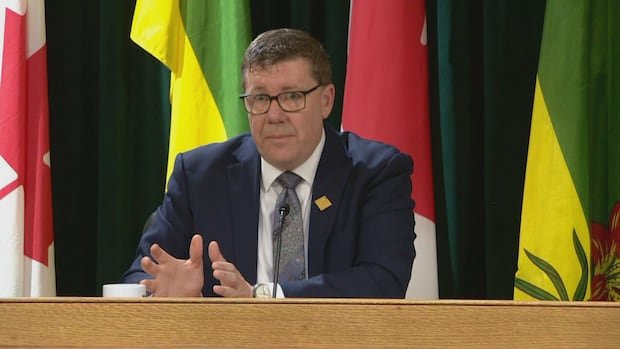
Carney said he remains in “constructive discussions” with Alberta Premier Danielle Smith, who has called for the emissions cap and tanker ban to be repealed, along with other environmental regulations she calls “bad laws.”
The two have talked about a “big deal” in recent months that would link Alberta’s desire for an oil pipeline to the British Columbia coast with the completion of the Pathways Alliance carbon capture project. Smith has said he hopes to have a deal ready for the Gray Cup by mid-November and submit a proposal to the Major Projects Office by spring.
Asked Friday whether he supports a new pipeline to the West Coast, Carney said the government believes in “nation-building projects,” including conventional energy projects, but that they must have material economic benefits, be consistent with climate goals and provide benefits to indigenous people.
“It depends on all those elements, and this government will address proposals that have the possibility or prospect of achieving them,” he said.
Smith and industry leaders have repeatedly said that no pipeline project is worth it while the emissions cap and tanker ban remain in place. Enbridge CEO Greg Ebel said in a speech last week that his company would not build a “pipeline to anywhere,” referring to the industry’s inability to export oil off the coast of British Columbia due to the tanker ban.
Complicating matters is a dispute brewing in recent weeks between Smith, a Conservative, and British Columbia NDP Premier David Eby, who on Tuesday said Smith’s pipeline plan threatens community support and the social license that would allow other major projects along the coast to move forward.
Eby said repealing the tanker ban would risk upsetting the current “fragile consensus” on resource development, one he hopes to strengthen.
Smith responded to Eby’s comments, calling them “un-Canadian and unconstitutional.”
Possible future pipeline projects
The interprovincial dispute arose during Senate question period Thursday, when Energy and Natural Resources Minister Tim Hodgson was questioned about Ottawa’s plans to help advance an oil pipeline project.
“How can your government expect to make Canada an energy superpower while blocking all routes to the ocean?” asked Senator Yonah Martin, a conservative from British Columbia.
The federal government has the constitutional authority to regulate interprovincial pipelines. Hodgson said any project needs the support of the jurisdiction it is being built in, adding that Alberta needs BC’s support if it wants to build.
“That’s between the province of Alberta and the province of British Columbia,” Hodgson said. “We have said we will be a constructive participant in that tripartite discussion. The province of Alberta has work to do.”
Another route for oil exports from Alberta could be in the works. Meeting with US President Donald Trump in Washington earlier this week, Carney floated the idea of reviving the Keystone XL pipeline in exchange for relief for Canada’s steel and aluminum sectors.
But critics say even the Keystone XL plan faces hurdles if the government doesn’t budge on the emissions cap.
“It doesn’t matter if you can build a pipeline if you can’t put anything through it,” Conservative MP Andrew Scheer told reporters in Ottawa on Wednesday.